Or course, the Bitmenu system works for all file formats. The evidence shows that those producing audio materials need not burden themselves with increased file sizes incurred with higher sampling rates.

Tuesday, February 26, 2013
Nerd Alert! Analyzing Audio Files
We have shared Neil Young's assertion that better quality digital audio requires higher sampling rates. Now, Wired magazine and posted an excellent rebuttal. Sampling is a discreet sample process and produces exact analog waveforms. Feel free to explore as needed.
Or course, the Bitmenu system works for all file formats. The evidence shows that those producing audio materials need not burden themselves with increased file sizes incurred with higher sampling rates.
Or course, the Bitmenu system works for all file formats. The evidence shows that those producing audio materials need not burden themselves with increased file sizes incurred with higher sampling rates.

Friday, January 18, 2013
Mega Cloud Storage
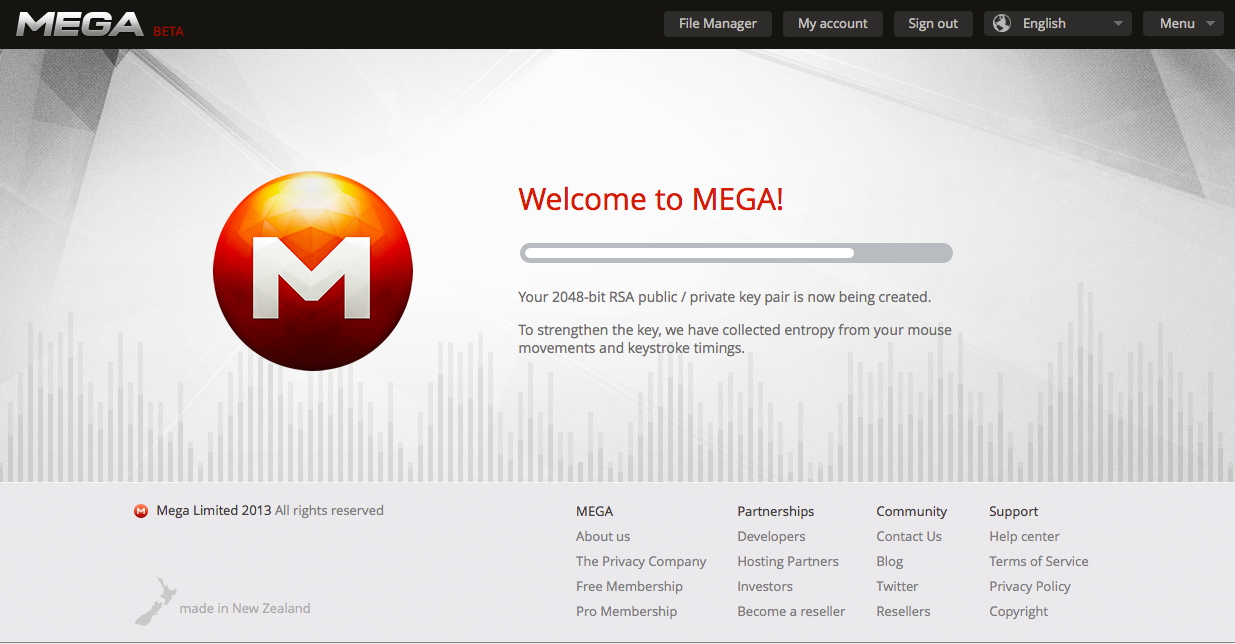
It's called Mega and it opens on Sunday. UPDATE: It's now live and receiving huge amounts of publicity (more below). UPDATE: Kim.com gets his story out in 14 minute YouTube chunks:
Part 1:
Part 2:
Part 3:
Part 4:
Part 6 (final):
As reported by Ars Technica, the site is designed to be simple to use and offers 50GB of free storage. Paying users get 500GB of storage plus 2TB of transfers for $14/mo. All files are encrypted so the only way to share a file is to generate a public link to the file. Given that users are moving more data between devices, 50 GB seems like a lot but might soon become standard amongst rivals.
One tidbit bears watching: Users who share links to files with other Mega users see those files appear immediately in the users' account, similar to Google Drive.
At Bitmenu, we have experimented with for-pay distribution using cloud-based systems. In other words, users of Mega might one day put a price on the files they share (currently, Bitmenu sellers must upload their files to our servers). Would you want that?
-----------
Update: In some respects, the federal takedown of MegaUpload has enabled Kim.com to pivot and release a version 2.0. How is it different? As detailed in Forbes, only the individual user holds both the encryption and decryption keys to the files they load into the system. This means that Mega cannot ever know what is being stored on their service and thus cannot "turn over" that content to authorities if required to under warrant.
Tuesday, January 1, 2013
TV is Getting Coffee
We consider Louis CK as a pathfinder when it comes to how comedians and others can use technology to reach their audience and profit from the relationship. I don't think comedians do it just for fun. They want to make money at it. They think about this a lot.
For example, click the image to view the embedded episode of Comedians in Cars Getting Coffee. It shows that we are not the only ones exploring new business models for creative artists and producers. At the 8:48 min mark, Mel Brooks endorses Louis CK.
TV shows like this are looking for lower cost methods to produce episodes that generate enough of an online audience to sustain the effort. Note the use of lavalier mics taped to jackets, members of the film crew visible for some cuts, etc. Considering that these men revolutionized the sitcom, it's worth paying attention to where they are looking and what they are saying.
For example, click the image to view the embedded episode of Comedians in Cars Getting Coffee. It shows that we are not the only ones exploring new business models for creative artists and producers. At the 8:48 min mark, Mel Brooks endorses Louis CK.
TV shows like this are looking for lower cost methods to produce episodes that generate enough of an online audience to sustain the effort. Note the use of lavalier mics taped to jackets, members of the film crew visible for some cuts, etc. Considering that these men revolutionized the sitcom, it's worth paying attention to where they are looking and what they are saying.
As Carl Reiner, Mel Brooks, Jerry Seinfeld and others follow the path of Louis CK, they will build in direct sales mechanisms. We expect these experiments to continue!
Friday, October 12, 2012
Checking Out Is Hard To Do
"Do we really need the user to set up an account with us when they might be buying a single item and just want that, right away?"
In the Bitmenu system, user accounts are for customer service purposes. We track each purchase and help buyers resolve issues. Since we make such lightweight use of accounts, we set them up automatically and in the background.
"If a user gets a tweet or email with an offer to purchase something, wouldn't they prefer to use a payment method they already trust and use regularly?"
Bitmenu currently offers purchase using Amazon or PayPal credentials. Our system does not hold funds but acts as a broker and agent for our Sellers. Buyers are sent to Amazon Payments or PayPal where they authorize the purchase amount and then are returned to us for fulfillment. The user presents their credentials to our payment partner, who then validates the purchase to us in the background.
This video from Google illustrates some of the issues we address with our system.
Sunday, September 30, 2012
Get Your Hi-Res Audio

Read what Rolling Stone magazine says about his Pono service and player. We will have to stay tuned to learn more.
"His reasons are so not based in commerce, and based in just the desire for people to really feel the uplifting spirit of music," Flea said in defense of Young. "MP3s suck. It's just a shadow of the music."
Neil appeared for a video interview with the WSJ's Walt Mossberg last year, and Pono seems to be one outcome from his work since then.
Bitmenu handles higher resolution files with ease. Users download and play them on the device of their choosing. Since the files are larger than MP3s, they are harder for users to share through emails. Any artist or producer who is looking to deliver Hi-Res audio would be welcome to write us at publish@bitmenu.com.
Sunday, September 2, 2012
QR Codes That Rock
While QR codes are recognized and used more frequently now than ever, they are far from ubiquitous. Today, TechCrunch came out with a nice piece suggesting something that would make them mainstream: make every smartphone camera into a scanner.

Many in the tech community expect a new technology, NFC, to become commonplace. The article argues for not waiting for a whole new generation of chips to make their way into the hands of every consumer when we already carry devices that can do the job. So much can be communicated via simple URLs: just look at any web page. By making standard digital cameras just a bit smarter, they can become scanners that link users to remote resources.
One interesting approach is to make the QR code blend into the artwork surrounding it. Visualead has developed a nice approach: upload an image to their site along with your target URL and they will overlay a QR code onto your image.
Can you see the Bitmenu URL in the image above? Our Sellers can use the Visualead site to attractively present their items for sale.
Friday, August 31, 2012
The Consumer's Voice

A snip:
"I'm a person who pays for content because I want to support the people who created it, but who's increasingly frustrated by how hard content owners make it to just give them my money sometimes. That may put me in the minority, but I don't think I'm alone."
Sunday, August 19, 2012
Digital Theater Downloads Extend Performances
 Every so often we see evidence of sustainable business models built around distribution of digital media. When we look into how purchases are made and media delivered, we think of how Bitmenu is different and could be used for similar purposes.
In this case, a group in the UK sells theater performances:
Digital Theatre works in partnership with the leading theatre companies and arts organisations in the country to bring the best theatre to your desktop or television screen.
As Apple TV and other internet-connected solutions bring video to the television set, people will choose to view purchases this way as well as through well-known "stores". This review provides a great example of how this niche service is used. As noted, the site requires registration. Users have to create a userID and password. They must also supply personal information, including mailing address, and credit card information. In other words, VOD sites like this have to build a relationship with the user before they can sell anything.
Bitmenu makes it easy for users to buy without sign up or registration. Users pay and download their purchase without handing over any of the information mentioned. They use their Amazon or PayPal account and Bitmenu verifies the transaction prior to releasing the download.
For niche VOD services, Bitmenu enables a unique casual purchase makes buying so easy they are easy to recommend.
Saturday, August 11, 2012
How Google Will Supoort DMCA Actions

Here is Google's statement:
"Starting next week, we will begin taking into account a new signal in our rankings: the number of valid copyright removal notices we receive for any given site. Sites with high numbers of removal notices may appear lower in our results. This ranking change should help users find legitimate, quality sources of content more easily."
This statement has triggered questions about DMCA (Digital Millenium Copyright Act) and what Sellers can do to generate traffic to their sites as opposed to repeat infringers. The statement received positive reviews by the MPAA and the RIAA, as noted by popular Search Engine columnist Danny Sullivan.
At Bitmenu, we have designed our systems to benefit media creators. Now we are seeing Google take the same stance. From the RIAA quote:
"This should result in improved rankings for the licensed music services that pay artists and deliver fans the music they love."
Of course, Bitmenu is unique in that we enable Sellers to easily reach out to Buyers directly. The action that Google puts into effect on Monday should help them stand out as well.
Wednesday, August 1, 2012
Amazon's Video App for iPad Features Amazon Purchase Flow
 Today's release of Amazon Instant Video for iPad contains an important variation on most media sales made to iOS devices: it circumvents the iTunes Store infrastructure.
Much has been made of Apple's 30% "tax" on all items sold through their various iTunes-enabled e-commerce services, including the App Store, iBookstore and iTunes Music Store. Developers or publishers have had to work with Apple to enable "in app" purchases or otherwise make their media available from Apple. The "native app" approach was at first assumed to compliment the "native web" approach to buying things on iOS, but the pendulum has recently swung strongly in favor of the app approach.
Now, Amazon is providing a "native web" purchase path that presents a compelling alternative. As reported by AppleInsider, "To circumvent Apple's requirements for in-app purchases, new content must be bought from Amazon via the iPad's Safari Web browser. Purchases made on Amazon.com through the browser will appear in the Your Video Library section of the iPad application."
While Apple boasts a system with over 400 million active credit cards on file, Amazon has nearly 200 million. Given there are only 170 million US credit cardholders, both of these services have pretty much covered that part of the market.
So, Amazon has creating a shopping experience that starts and ends on the web, and never touches the Apple Stores. Users download a free app from the Apple App Store, but their purchases are handled via Amazon's Web Services. Interestingly, they have worked for years with developers like Bitmenu to refine this technique.
We expect more Sellers to choose to market their media on their own terms.
Friday, July 13, 2012
Google+ Introduction For Marketers

- Set up a web catalog and drive traffic to it.
- Build and manage an email list with offers.
- Set up a Facebook page and post offers to your Facebook stream.
- Insert offers into Twitter posts.
As if these weren't enough to worry about, now Google has released new versions of Google+ for the web, Android, iPad and iPhone. These are now roughly equivalent in functionality, which means you can easily post or broadcast from anywhere, anytime.
Google+ is a different beast for Sellers. When you create a Facebook "friend", they "accept" you and it's a two-way connection. Google is more like Twitter in that you can "follow" anyone and they can "follow" you by "adding" you to their "circles". So, the goal is to be in as many circles as possible. Then, when you post something it will appear in the stream of the people who are following you.
Here is a very quick tutorial from the Traffic Generation Cafe. And Forbes ran an article and video of an artist using Google+ exclusively as their marketing vehicle.
 The wild-cards that makes Google+ transformative right now are "hangouts". Think of it as Skype that works on smartphones and PCs. You can have interactive video chats with up to 9 people that can also be viewed in real-time through YouTube. Also, Google+ lets you set up "Pages" for events or brands, and these have their own news feed, hangouts and circles. Finally, the search function makes it possible to find old posts easily and for your posts to be discovered.
We think it's possible to build businesses around Google+. Of course, Bitmenu links format nicely within Google+ posts!
Monday, July 9, 2012
Lady Gaga Sells To Little Monsters

Like JK Rowling's Pottermore, Lady Gaga's Little Monsters is all about community with some critically important e-commerce offerings.
Specifically, tickets to her "Born This Way Ball" tour are available through her site (via TicketMaster).
In addition, users can "join" the event, which subscribes them to a Pinterest-style stream of items contributed by others for that event.
TNW reports the site has gone through its beta phase and is now available to all through a simple sign up (Twitter and Facebook can be used).
Can we expect her to make available media for sale as well, a la Louis CK? We would be happy to help!
Sunday, July 8, 2012
A Smart Look at App-Enabled Credit Cards

Anyone who has bought something through iTunes or Amazon might notice charges on the card they have associated to those accounts for items not purchased directly from these stores.
When you buy something through an app on your iPhone, it is using the credit card you have on file at Apple. Likewise, when you buy something using your Amazon account, it might well be through an app provided by services like Bitmenu.
App-enabled credit cards provide a secure way to offer more for sale from more places without requiring consumers to register their credit card with each merchant or vendor they wish to buy from. As alluded to the Forbes article, your iTunes or Amazon account might soon enough enable you to purchase things from within a physical store.
To make this happen, developers must build apps that connect users with the credit cards they already have on file with iTunes, Amazon or other payment processors. As these payment services work with more developers, the kinds of applications suggested by the article will become available.
Tuesday, July 3, 2012
European Courts OK Resale of Computer Downloads

"Simply put, legally purchased and downloaded games will be treated like physical copies of the game, and consumers can then sell their ‘used’ game."
The Official Release from the Court makes it clear that an original buyer cannot sell part of the license and must make their own copy unusable if they do sell to another acquirer.
What does a "used digital work" look like? The answer, of course, is it looks identical to the original - a perfect replica with no battered pages or faded resolution. The only difference between a used copy and an "original" is how the right to use it is recognized.
At Bitmenu, we have been watching closely for new developments not only with file-sharing and rights management, but also legitimate re-distribution of digital works.
Thursday, June 28, 2012
Louis CK Takes His Act On The Road

What's going on here?
Using ticketing services such as Eventbrite and Etix, performers can take control of the sale of tickets to their fans. Tired of high service fees and resellers who jack up ticket prices, Louis CK has lined up over 50 performances in 39 cities.
The comedian announced Monday, June 25, that he'll charge a flat, no-fee rate of $45 to all of the shows on a 39-city tour he kicks off in October. Tickets will bypass ticketing services and be available only through louisck.com.
The tweet speaks for itself: Appearing in venues that hold an average audience of nearly 2,000, 100,000 tickets have been sold in two days. We now know that this comedian considers his line of work an agrarian occupation: he develops new material each year by going on the road, then creates a video at the end that he sells.
Here's part of his pitch:
"So here's all where I'm coming on this tour. Click on the right to buy tickets. You can't get them ANYWHERE but here. So no crazy high ticket fees, no scalpers, no annoying emails, no joining a thing that you hate."
Performers interested in this approach can work with the services mentioned and can contact Bitmenu to sell their digital media at customerservice@bitmenu.com.
UPDATE (7/2/12): The Atlantic weighs in with more details.
Monday, June 25, 2012
A New Tone from the RIAA: "Reasonable and Well-Considered"
While high-profile copyright infringement litigation has drawn the public spotlight to the organization in recent years, Cary Sherman is sounding a different note, six months into his tenure at RIAA.
What many don't realize is that the vast majority of the sales made in the music industry come from very few, massively popular items. Of the 77,000 new albums released last year, 80% sold fewer than 100 copies. 94% sold fewer than 1,000.
As Cary suggests 11 minutes into the video, "For all the opportunities for niche, specialized markets where the music is going to be able to find its fan base, what's interesting is that most people download and stream the stuff that is most popular".
Having said that, Cary is reaching out to new distribution methods and platforms. He suggests that record labels are to recording artists as venture capitalists are to entrepreneurs. As head of the industry association, he is working to broaden DRM free music distribution and to make it simpler and easier to license music and develop new business models.
Sales of music related products have always been central to Bitmenu's service. For the vast majority of those producing music, our method of direct sales and delivery should be considered. We welcome any inquiries at customerservice@bitmenu.com.
Friday, June 22, 2012
Celebrities Drive E-Commerce
 At Bitmenu we are experimenting with celebrities to sell digital media direct to fans. Mostly this has been in the form of ebooks and music lessons, but we have entertained discussions of high quality audio files and full-length films. The key has been to leverage events, such on-stage appearances. A simple QR code or tweeted message starts the purchase and delivery process.
 Think of audiences leaving a concert and buying a video of the signature song being performed just as they saw it.
As reported in Pando Daily, celebrities and their newfound ability to connect with their fans via social media is creating a new wave of commerce. A snippet:
"In the past, celebrities were only able to communicate with their fans through traditional media. This was limiting, because it was a one-way dialogue, with no opportunity for fans to respond to or interact with them. But today, thanks to Facebook, Twitter, Tumblr, and Pinterest, celebrities can talk directly to their fans, and can share the products they like, love, and even produce."
Trading Digital Rights and Reselling Content

Frederic Filoux has some powerful thoughts about trading rights to digital media:
The shift from paid-for files to rights for books or digital contents won’t come easily. As a telco exec told me last week: ‘It took centuries to convince people their money was more secure in a bank than under a mattress; convincing them they should trade ownership foraccess rights will take some time’. But this is the logical way to go.
At Bitmenu, we have designed our systems to recognize rights, files and transactions as separate things. This means the comments of a college student can be contemplated.
From a college student’s perspective, if the proper actors who see the profit take action, I for one will gladly step up and purchase rights to an etextbook that won’t be made completely obsolete in three months when they come out with a new edition. I am liking the idea already… And then I can re-sell those rights–they may even appreciate while I own them!
Wednesday, June 13, 2012
Apple Announces Passport at WWDC

On the panel:
In a nutshell, the breath-taking demo was for an airline ticket. In Apple's on-stage demo, when you buy an airline ticket you will be able to store it in your Passport. Even if the flight is delayed or the gate changes, the ticket in your Passport will always be up to date. So, imagine Apple coaxing every store at airports to support Passport as well. You can then walk around the airport and buy anything with just your iOS device, through your iTunes account. This takes us back to small paperback-only bookstores in the 1980s opening up first in airports, then spreading from there.
Bitmenu is enabling brick and mortar stores to offer coupons to be redeemed at physical locations in much the same way. Merchants can welcome new visitors to their store and they can buy on their mobile devices (not just iOS).
Thursday, June 7, 2012
Pinterest Targets Social Selling

Of these excellent networks, Pinterest provides a compelling sales environment for Bitmenu Sellers to consider. Sellers can organize boards of offers that persistently give their followers opportunities to purchase and encourage their network of followers and others to "re-pin", comment and buy as well.
Here's an example Pinboard featuring some excellent lessons from Acoustic Guitar magazine, available for sale via Bitmenu links.
To get the most out of Pinterest, consultant Jeff Bullas has written a concise blog post, 10 Creative Ways to Market on Pinterest that should be read by everyone selling through social media.
UPDATE: An authoritative report was put out by All Things Digital, about why e-commerce is head over heels for Pinterest.
Subscribe to:
Posts (Atom)